Ryan P6 Services
Pty Ltd ABN: 83 157 924
224
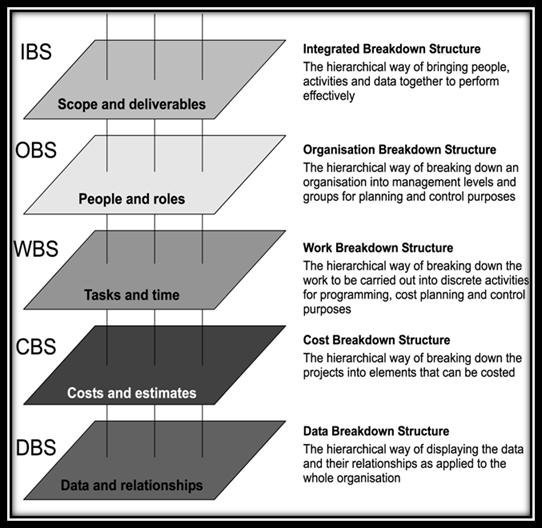
Integration of WBS, CBS
and OBS
Ryan P6 Services help organizations reduce project
risks by aligning cost, resources and schedule in a single, user-friendly
Primavera Project Management Enterprise environment. With its seamless
integration with Primavera ERPS systems, we will combine budget, committed
costs, actual costs, changes, progress data, resource data and schedule dates
required to effectively communicate project performance with statistically
accurate estimate at completion information, best utilization of limited
resources and fulfil resource demands. With Ryan P6 Services you will predict
and influence project results with real-time information required to pinpoint
potential problems and react quickly to resolve issues.
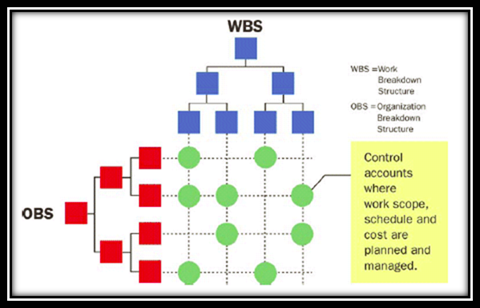
Work Breakdown Structure
(WBS)
Identifying the main deliverables of a project is the
starting point for deriving a work breakdown structure. When creating a WBS, the project
manager defines the key objectives first and then identifies the tasks required
to reach those goals. A WBS takes the form of a tree diagram with the
"trunk" at the top and the "branches" below. A
well-organized, detailed WBS always assist key personnel in the effective
allocation of resources, project budgeting, procurement management, scheduling,
risk management, product delivery.
In
the process of breaking down the tasks, we can break them down into different
levels of detail. One can detail a high-level task into ten sub-tasks while
another can detail the same high-level task into 20 sub-tasks. Therefore, there
is no hard and fast rule on how you should breakdown a task in WBS. Rather, the
level of breakdown is a matter of the project type and the management style
followed for the project. In general, there are a few "rules" used
for determining the smallest task. In "two weeks" rule, nothing is
broken down smaller than two weeks’ worth of work.
This
means, the smallest task of the WBS is at least two-week long. 8/80 is another
rule used when creating a WBS. This rule implies that no task should be smaller
than 8 hours of work and should not be larger than 80 hours of work.
There
are many design goals for WBS. Some important goals are as follows:
·
Giving
visibility to important work efforts
·
Giving
visibility to risky work efforts
·
Illustrate
the correlation between the activities and deliverables
·
Show
clear ownership by task leaders
Cost Breakdown
Structure (CBS)
Used
as an alternative to the WBS, the CBS is a useful way to use outline codes to
group the project's tasks by cost centre. Sophisticated totals and subtotals
can be created to determine how effectively the project is progressing, cost
area by cost area.
Following
are some of the valuable and essential techniques which we use for efficient
project cost control:
1.
Planning
the Project Budget
2.
Keeping
a Track of Costs
3.
Effective
Time Management
4.
Project
Change Control
5.
Use
of Earned Value
It
is advisable to constantly review the budget as well as the trends and other
financial information. Provide reports on project financials at regular
intervals will also help keep track of the progress of the project. This will
ensure that overspending does not take place, as you would not want to find out
when it is too late. The earlier the problem is found, the more easily and
quickly it could be remedied.